
From Beneath the Ground, A Nation Rises
August 17, 2026A Different Kind of Regulator
August 17, 2026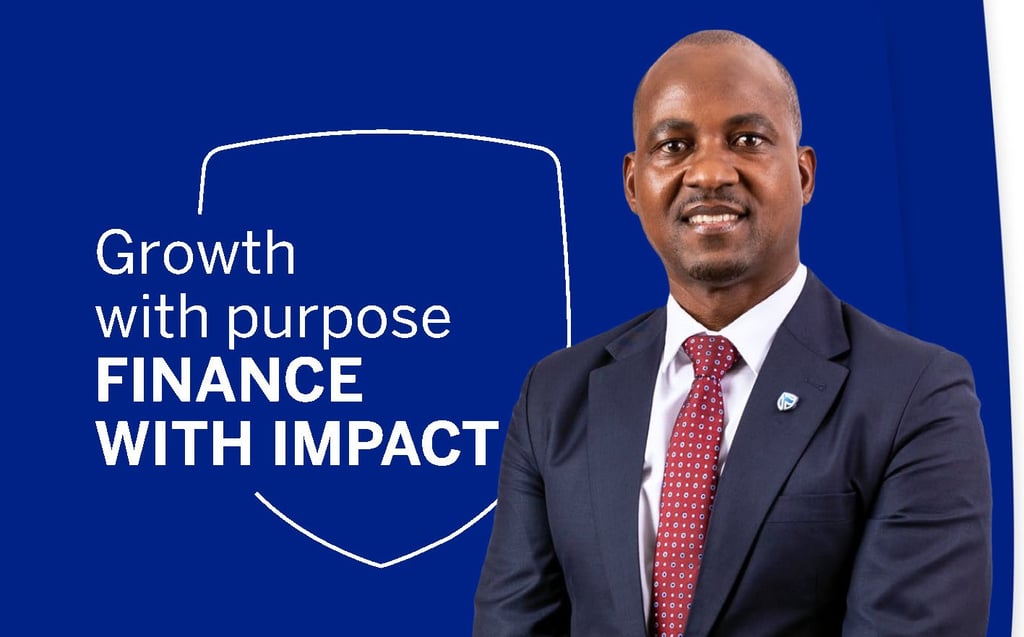
This is an era that demands more from banks: not just profits, but participation. Not just transactions, but transformation. Mr. Modise’s leadership is rooted in a belief that banking must be intelligent, human, and catalytic — enabling entrepreneurs, supporting national industrial goals, and helping design the ecosystems that foster resilience and inclusive prosperity.
This conversation isn’t just about banking. It’s about vision. It’s about the kind of country we want to build, and the kind of institutions we need to get us there.
You lead one of Botswana’s most forward-thinking financial institutions.What guiding vision anchors your leadership — and how do you see Stanbic Bank contributing to the country’s long-term development story?
For me, leadership is personal. It’s about showing up — consistently, authentically, and with courage. I am deeply honoured to lead a team of bold thinkers and doers who are not just banking Botswana’s economy, but building her future. Our purpose, “Botswana is our home, we drive her growth”, is not a slogan — it’s a solemn responsibility.
We are unapologetically bold in backing Botswana’s future — from farms to fintech, and from solar fields to sustainable cities. Whether through our Intelligent Document Processing system that brings speed and intelligence to customer service, or through inclusive digital platforms like our refreshed App, we are investing in smarter, faster, more human banking. But it goes beyond tech.
Our partnerships speak volumes: through the Citizen Economic Empowerment Programme (CEEP) with Debswana, Botswana Chamber of Mines, and Okavango Wilderness Safaris, we are fostering inclusive supply chains that empower citizens. At the same time, we’re stepping up to fund Botswana’s renewable energy ambitions. In 2024, we supported pioneering solar and bioenergy projects designed to power communities and industries sustainably. These investments reflect a future where clean energy fuels growth, and where Batswana are owners and drivers of that transformation.
Our CEEP focus is intentional and long-term, and the Debswana partnership is a great example to look at more closely. In 2024, we took a bold step by signing a Memorandum of Understanding with this diamond leader, a partnership rooted in a shared belief that empowering citizen-owned businesses isn’t just good economics, it’s imperative for national progress and prosperity. That MoU wasn’t about ticking a box; it was about action. Since then, we’ve put real capital and capability into motion — from a P1 million injection into 20 SMMEs in the Boteti region, to hands-on workshops in Jwaneng and OLDM focused on practical tools like financial literacy, record-keeping, and digital marketing.
What makes this partnership work is that it’s not one-off — we’re walking the journey with these businesses, checking in, measuring impact, and adjusting where needed. It’s a living model of what inclusive, grassroots economic growth can look like — and I’m proud that Stanbic Bank Botswana is at the heart of it.
We’re reinvigorating community through platforms like the Stanbic Bank Gaborone Golf Club, making it more accessible to women and youth. And in every deal we do — like the Norsad facility aligned with sustainable development values, or financing renewables for a greener Botswana — we aim to unlock value, not just for balance sheets, but for Batswana.
I couldn’t be prouder to lead a team that leads from the front, together.
Botswana is rethinking its economy — shifting toward industrialisation, citizen-led growth, and private sector acceleration. How is Stanbic aligning its portfolio, partnerships, and lending philosophy with this national transformation?
Botswana is transforming — and so are we. As the country shifts toward a more citizen-driven, industrial, and knowledge-based economy, we are reshaping our portfolio to walk in step with this vision. We are not just lenders — we are nation-builders. We are increasingly focused on productive sectors that fuel national priorities: manufacturing, renewable energy, infrastructure, citizen enterprise.
Our partnership with CEDA is a powerful example — marrying public ambition with private capital to seed citizen-led growth. We are also deepening our blended finance models and sector-specific lending frameworks to unlock funding for entrepreneurs and enterprises that traditional banks often overlook. It’s about rewriting the rules of access — because when local business wins, Botswana wins.
For many Batswana — especially youth and SMMEs — access to finance remains a systemic challenge. How are you reengineering Stanbic’s approach to truly empower entrepreneurs, close inclusion gaps, and enable local capital formation?
I firmly believe that no economy can thrive when its youth, women, and SMMEs are locked out of the financial system. We’ve moved from passive inclusion to intentional empowerment. Through our Stanbic Bank Accelerate Incubator, we’re not just disbursing funds — we’re building capabilities, confidence, and connections. It’s finance with follow-through.
AccelerateHer is one of my proudest platforms — because it speaks directly to the power of women-led enterprise. We’re not tinkering at the edges. These programmes are strategic; they reflect our belief that entrepreneurship is a national asset — one we must protect, nurture, and unleash.
We see ourselves as architects of ecosystems, not just providers of products. In agriculture, we’re working hand-in-hand with cooperatives and agri-tech innovators to deliver tailored input finance that follows the rhythms of real farming life. We help farmers move beyond survival toward sustainable commercial success.
In housing, our Smart Home Loan products are designed for dignity — flexible, inclusive, and structured for the real lives of real people. In trade, we open doors — leveraging our Standard Bank Group network to help Botswana’s businesses expand beyond borders. And in tech, our ambition is not just digital growth — it’s digital equity. We are committed to building platforms that are as inclusive as they are intelligent.
“By 2040, I want Stanbic Bank Botswana to be remembered not just for the profits we made, but for the lives we changed. I want us to be seen as a nation-builder.”
In a region racing toward digitalisation and fintech disruption, how is Stanbic innovating — not only in product, but in mindset — to stay relevant and deliver real impact for Botswana?
To us, innovation starts with empathy. Yes, we are investing in digital — but more importantly, we are investing in digital inclusion. With solutions like Shyft, we’ve empowered our clients to manage foreign exchange securely and conveniently, right from their phones. No queues, no branches — just freedom.
Inside the bank, we are digitising with purpose. Our market-first IDP system is changing the game for KYC processing, making it faster, more compliant, and more customer-centric. But even beyond systems, we are investing in a culture of curiosity and learning. We challenge ourselves to stay agile, stay grounded, and stay relevant — not just to today’s clients, but to Botswana’s future.
You’ve spoken publicly about values-based leadership and banking with purpose. What does purpose-driven finance actually look like inside Stanbic — in decisions, culture, client relationships, and community investment?
Purpose-driven finance is our compass. It guides every investment we make, every partnership we enter, and every product we launch. Our SEE (Social, Environmental, Economic) framework is how we embed sustainability into our decision-making. We ask ourselves: will this move lives forward? Will this create long-term value?
It may be a cliché phrase, but we actually do “walk the talk”. Through platforms like the Women in Leadership Dialogue and Youth Empowerment Summit, we are amplifying marginalised voices and enabling new leadership pipelines. Internally, we are cultivating a culture where purpose is lived — from the branch floor to the boardroom. I tell my team often: we’re not just in banking — we’re in the business of building dignity and possibility.
When you look ahead to 2040, what would you want Stanbic’s legacy to be — in the economy, in society, and in the hearts of the people you serve?
By 2040, I want Stanbic Bank Botswana to be remembered not just for the profits we made, but for the lives we changed. I want us to be seen as a nation-builder — a bank that financed not just development, but dreams. A bank that stood with Botswana in every season: investing in industrial resilience, championing local business, expanding home ownership, and believing — always — in the brilliance of Batswana.
We’re not here for the short term. We’re here to stay. And our legacy must be one of catalytic impact, anchored in love for country and powered by a deep conviction that growth is not a goal — it’s a shared duty. As we work to finalise our next corporate strategy horizon, 2026 onwards, this is precisely the approach we are taking.
Additional comment:
I cannot underscore enough the fact that our vision is not just to bank Botswana, but to build her — boldly, inclusively, intelligently and sustainably. Every product, every partnership, every decision we make must answer a single question: does it move our nation forward? Because for us, growth is not a goal — it is a responsibility.